 +84855336622
 sales.attfloor@gmail.com


-
-
-
Total payment amount:
-


SPC Flooring Quality Control Checklist: What Importers Should Inspect Before Shipment
Monday,
12/10/2026
0
A competitive FOB price can help an SPC flooring importer enter a market.
But consistent product quality is what helps that importer stay in the market.
When thousands of square feet of flooring are shipped across international borders, even a small quality inconsistency can become a significant commercial problem.
A locking issue may create installation difficulties. A color variation may lead to customer complaints. Incorrect packaging may complicate warehouse operations. And discovering these problems after the container arrives can make resolution more expensive.
That is why SPC flooring quality control should never be treated as a final formality.
For importers, distributors, wholesalers, and private-label flooring brands, quality control is a process of confirming that the products being shipped match what was originally approved.
This guide explains what buyers should inspect, which quality checkpoints matter most, and how to approach SPC flooring pre-shipment inspection before releasing a container.
1. Quality Control Begins Before Production
One of the biggest misconceptions about flooring inspection is that it begins when finished products are ready for shipment.
In reality, effective quality control starts much earlier.
Before production, the buyer and manufacturer should establish a clear reference for what an acceptable product looks like.
1.1. Confirm the Approved Specification
An SPC flooring order should clearly define the product construction and commercial requirements.
|
Inspection reference |
What should be confirmed |
|---|---|
|
Total thickness |
Core + attached underlayment |
|
Wear layer |
Specified thickness |
|
Plank dimensions |
Length and width |
|
Surface |
Approved texture and finish |
|
Click-lock system |
Approved profile |
|
Color |
Approved decor reference |
|
Underlayment |
Material and thickness |
|
Packaging |
Carton, label and pallet requirements |
The purpose is simple: quality cannot be measured consistently without an agreed standard.
A product may appear acceptable during a visual inspection while still failing to match the buyer's ordered specification.
1.2. Keep an Approved Reference Sample
An approved sample helps establish expectations for color, surface texture, dimensions and construction.
However, a sample should not be treated as a guarantee that every plank in bulk production will be identical.
Instead, it should serve as a reference for inspection, alongside documented specifications and agreed tolerances.
For international buyers, retaining an approved sample can also make future repeat orders easier to evaluate.
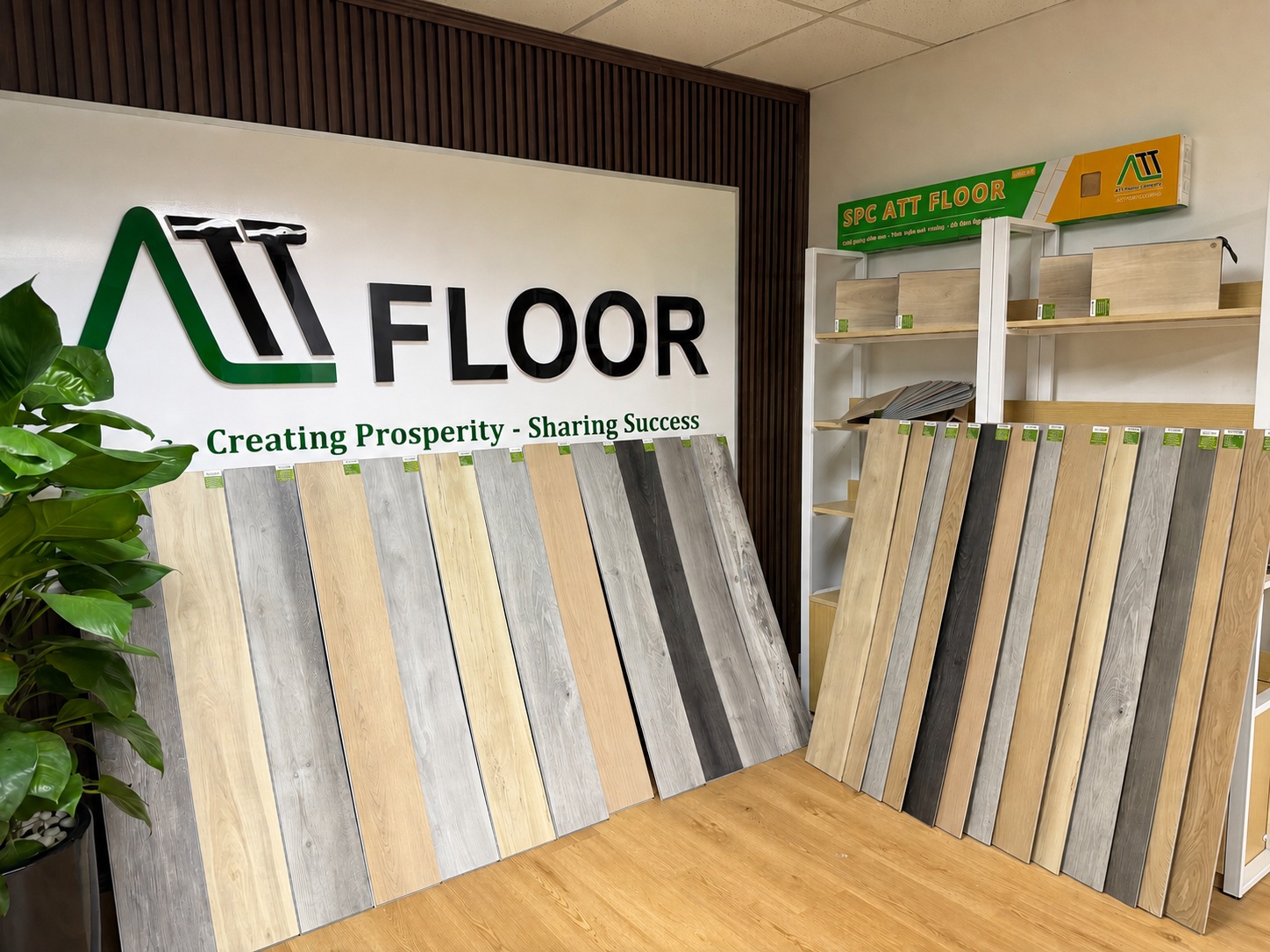
SPC flooring approved sample for quality inspection
2. Thickness Inspection: Check What You Actually Ordered
Thickness is one of the most straightforward quality characteristics to measure, but it is also one of the easiest to misunderstand.
For example, a product described as 5.0 mm SPC flooring may consist of:
-
4.0 mm SPC core
-
1.0 mm IXPE underlayment
The total thickness is 5.0 mm, but the core itself is not 5.0 mm.
2.1. Core Thickness vs Total Thickness
When inspecting SPC flooring, buyers should confirm which measurement is being reported.
This matters because the core and underlayment perform different functions.
Core thickness influences the rigid construction, while the attached pad contributes to the overall flooring system.
Measuring only the total thickness does not independently verify both components.
2.2. Why Multiple Measurements Matter
One measurement from one plank is not sufficient to represent an entire production batch.
Inspection should involve samples selected from different cartons or production positions, following an agreed sampling procedure.
Results should be compared against the approved specification and applicable tolerances.
The objective is consistency, not simply finding one plank that meets the target measurement.
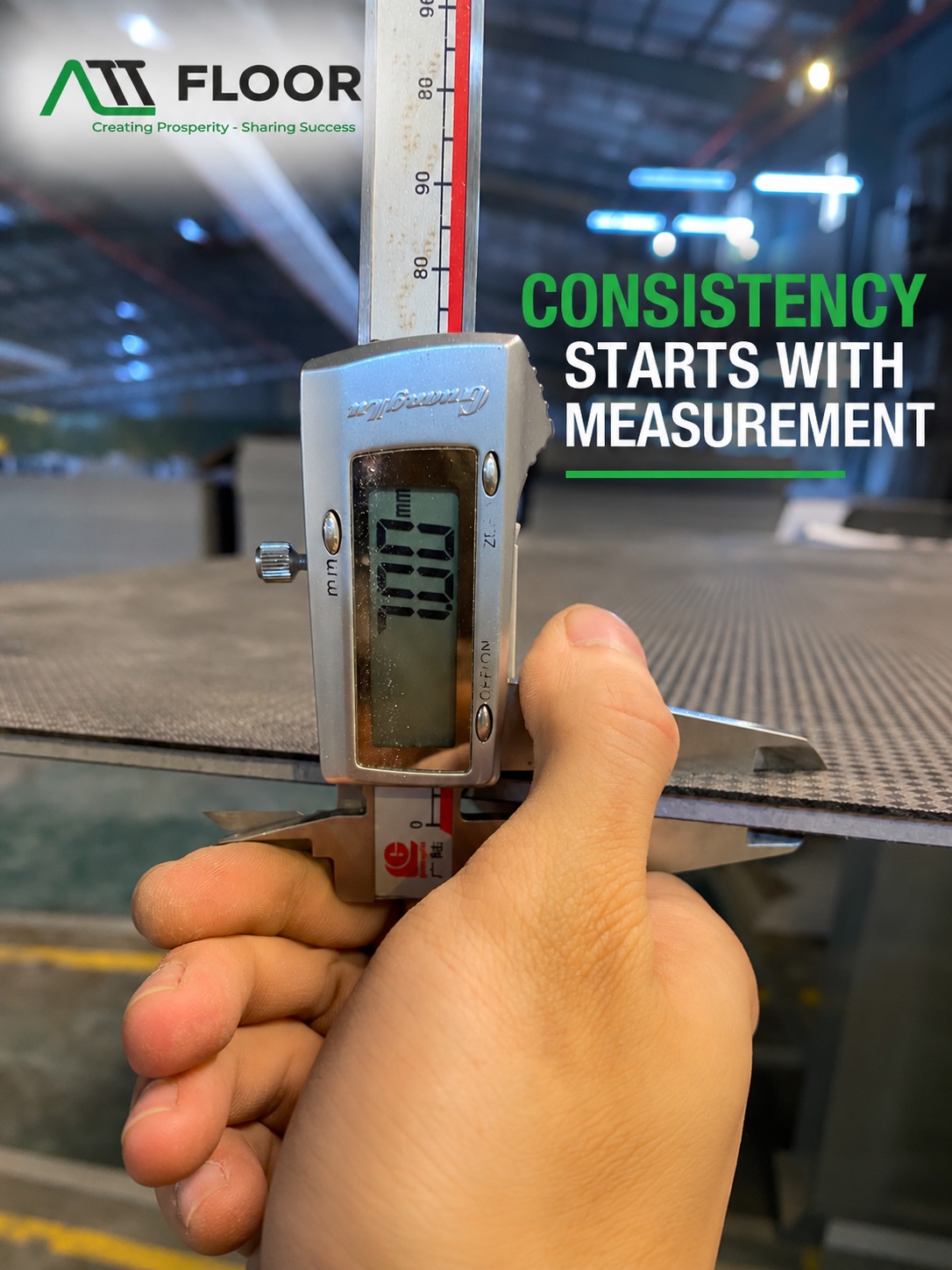
SPC flooring thickness quality control inspection
3. Surface Quality: More Than Visual Appearance
A flooring surface must do more than look attractive in a showroom.
It needs to maintain acceptable performance under the conditions for which the product is intended.
Surface inspection therefore involves both appearance and relevant performance testing.
3.1. Visual Surface Inspection
Inspectors should look for visible defects such as scratches, contamination, printing abnormalities, surface inconsistencies or damage.
They should also compare the decor and finish with the approved reference.
A small variation may be difficult to notice on a single plank but become more apparent when multiple planks are installed together.
3.2. Abrasion Resistance
Abrasion resistance is an important consideration for flooring exposed to repeated foot traffic.
Testing equipment, including Martindale abrasion equipment where appropriate, can help evaluate surface wear under defined laboratory conditions.
However, results must be interpreted according to the actual test method and acceptance criteria.
Wear-layer thickness alone does not prove the abrasion performance of a finished flooring product.
Different surface coatings, constructions and test conditions can influence results.
3.3. Scratch Resistance
Scratch resistance should also be considered separately from abrasion resistance.
A surface may perform well under one test but behave differently when exposed to concentrated scratching forces.
For this reason, buyers should avoid treating a single test result as proof of every type of surface durability.
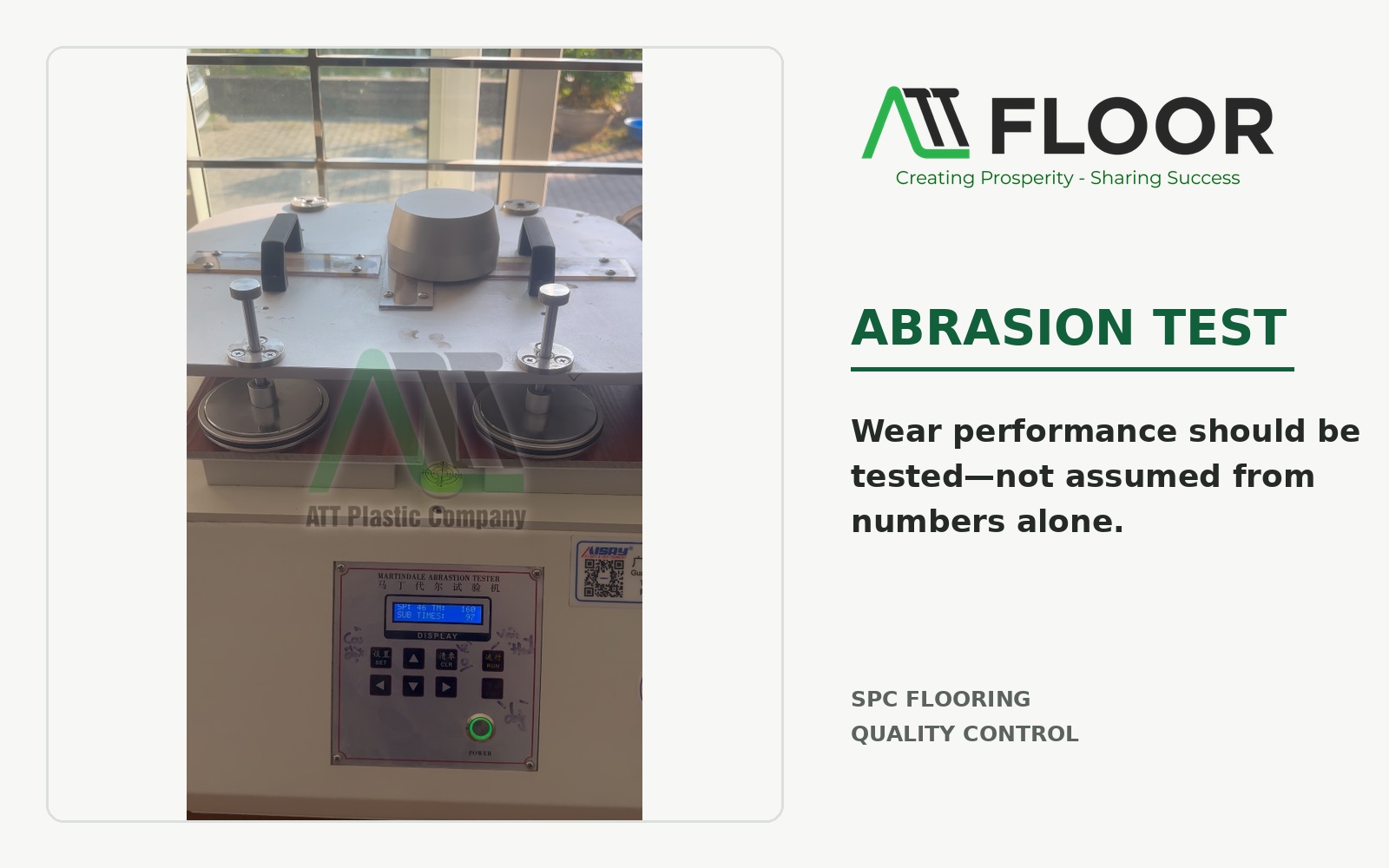
SPC flooring abrasion and scratch resistance quality testing
4. Click-Lock Inspection: Small Defects Can Create Large Problems
The click-lock system is one of the most important functional components of SPC flooring.
A plank may have the correct thickness, color and surface finish but still cause installation problems if its locking profile is inconsistent.
4.1. Profile Accuracy
The locking profile should be inspected for visible damage, deformation and machining irregularities.
Even small deviations can affect how planks connect.
4.2. Assembly Testing
A practical assembly test helps determine whether the planks can be connected properly.
Inspectors should evaluate:
-
Ease of engagement
-
Joint alignment
-
Visible gaps
-
Height differences between connected planks
-
Damage during assembly or disassembly
The evaluation should follow the product's approved installation method and acceptance criteria.
4.3. Why Click-Lock Problems Are Commercially Serious
For importers, locking defects are particularly concerning because they may not become obvious until installation begins.
At that point, the flooring may already have been distributed to retailers, contractors or project sites.
This creates additional handling costs and potentially damages the importer's reputation.
A successful pre-shipment inspection should evaluate how the flooring functions, not only how it looks.
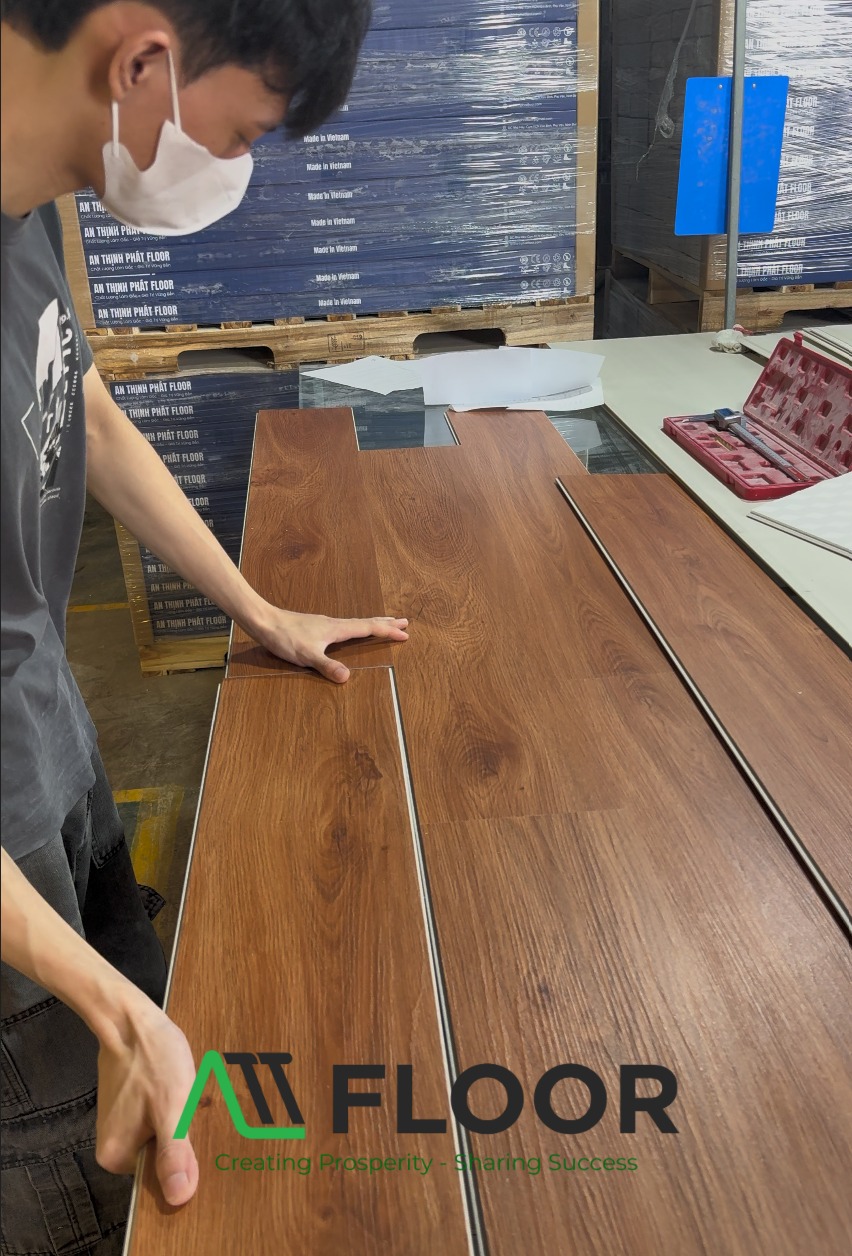
SPC flooring click lock assembly quality inspection
5. Color Consistency and Decor Control
Color consistency is another important part of SPC flooring inspection.
For distributors developing a branded collection, customers expect the delivered product to match the selected decor.
5.1. Check Against the Approved Decor
Finished products should be compared with the approved color reference under suitable lighting conditions.
Inspectors should distinguish between the intended variation within a wood-look design and unintended production inconsistencies.
5.2. Inspect Multiple Cartons
A single carton may not represent the entire production batch.
Sampling from multiple cartons helps identify whether color and appearance remain consistent across the shipment.
This becomes especially important when a container contains several decor codes.
5.3. Why Repeat Orders Need Attention
Color consistency matters beyond the first order.
When importers replenish a successful flooring collection, customers may expect the new inventory to coordinate with previously purchased material.
Therefore, buyers should maintain approved decor references and discuss reasonable batch variation expectations with their supplier.
6. Packaging Inspection: Protecting the Product After Production
Quality control does not end when the plank leaves the production line.
The product still needs to survive factory handling, container loading, ocean transportation and destination warehouse operations.
Packaging therefore deserves its own inspection checkpoint.
6.1. Carton Accuracy
Buyers should verify that carton information matches the approved order.
This may include product code, dimensions, quantity, batch identification and private-label artwork.
6.2. Carton Condition
Inspectors should look for damaged cartons, poor sealing or packaging that may not adequately protect the flooring.
6.3. Pallet Preparation
Palletized cargo should be prepared with appropriate stability and protection for the intended transportation process.
The exact packaging arrangement may vary depending on the product, loading plan and customer requirements.
For private-label importers, packaging errors can be particularly expensive because they affect both logistics and retail presentation.
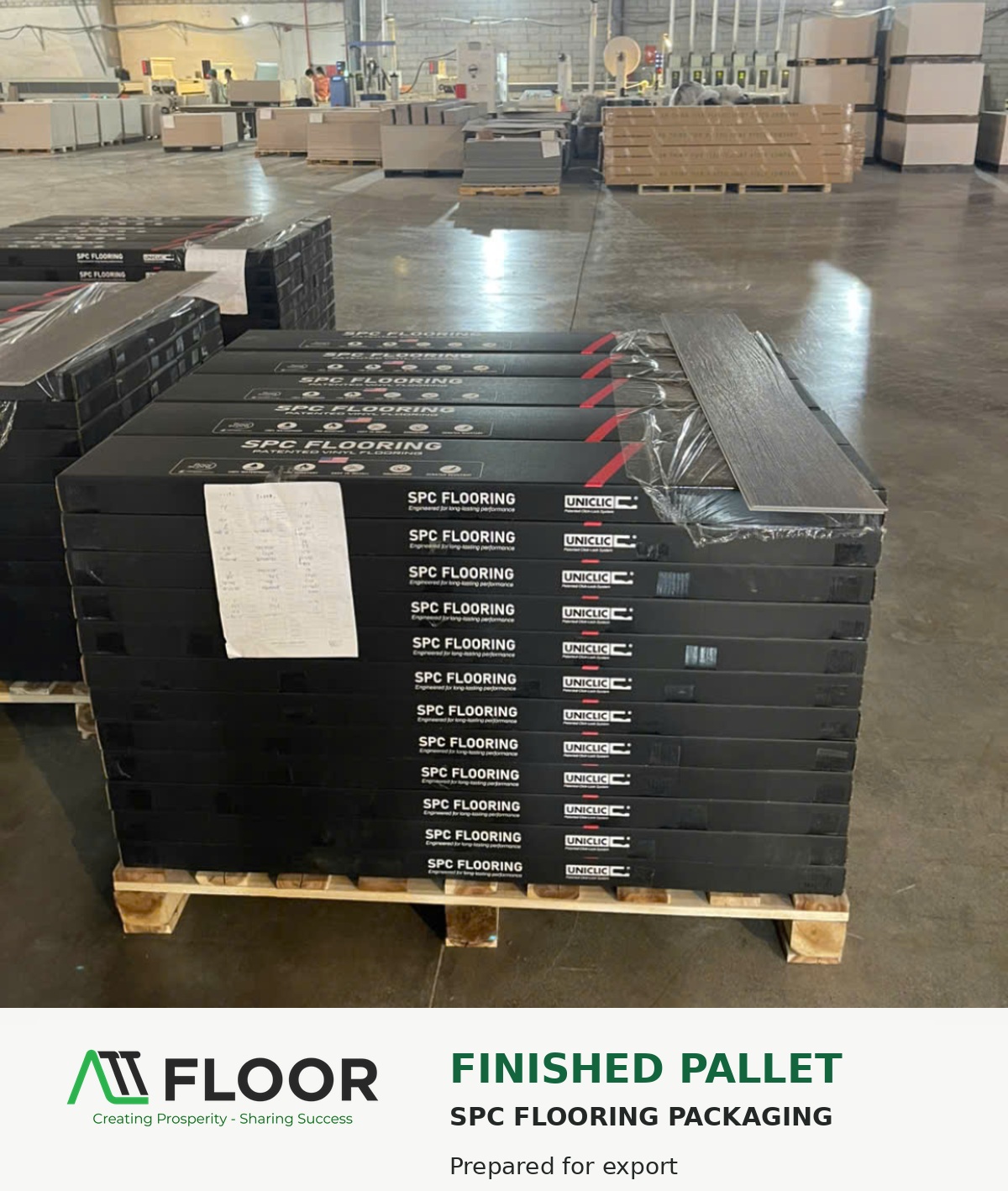
SPC flooring carton and pallet packaging inspection
7. How Pre-Shipment Inspection Should Work
A pre-shipment inspection for SPC flooring is most useful when it follows an agreed inspection plan rather than a casual visual check.
7.1. Establish Inspection Criteria
Before inspection begins, the buyer and supplier should agree on the applicable specifications, test methods, sampling rules and acceptance criteria.
Where relevant, the inspection plan may use a recognized sampling framework such as ISO 2859-1, with an agreed inspection level and AQL.
An AQL sampling plan does not guarantee that every item is defect-free. It provides a structured basis for making decisions about a sampled lot.
7.2. Select Samples Across the Shipment
Samples should represent the production lot rather than only conveniently accessible cartons.
Where multiple colors or production batches are involved, the sampling plan should account for those differences.
7.3. Document the Findings
A useful inspection report should identify what was checked and what was found.
Photographs, measurement records, sample identification and defect descriptions make the report more actionable.
7.4. Resolve Nonconformities Before Release
When inspection identifies a problem, the buyer and manufacturer should determine whether the affected goods require sorting, rework, replacement, additional testing or another agreed corrective action.
Shipment release should follow the agreed acceptance process.
The purpose of inspection is not simply to identify defects. It is to create an opportunity to resolve problems before they become overseas claims.
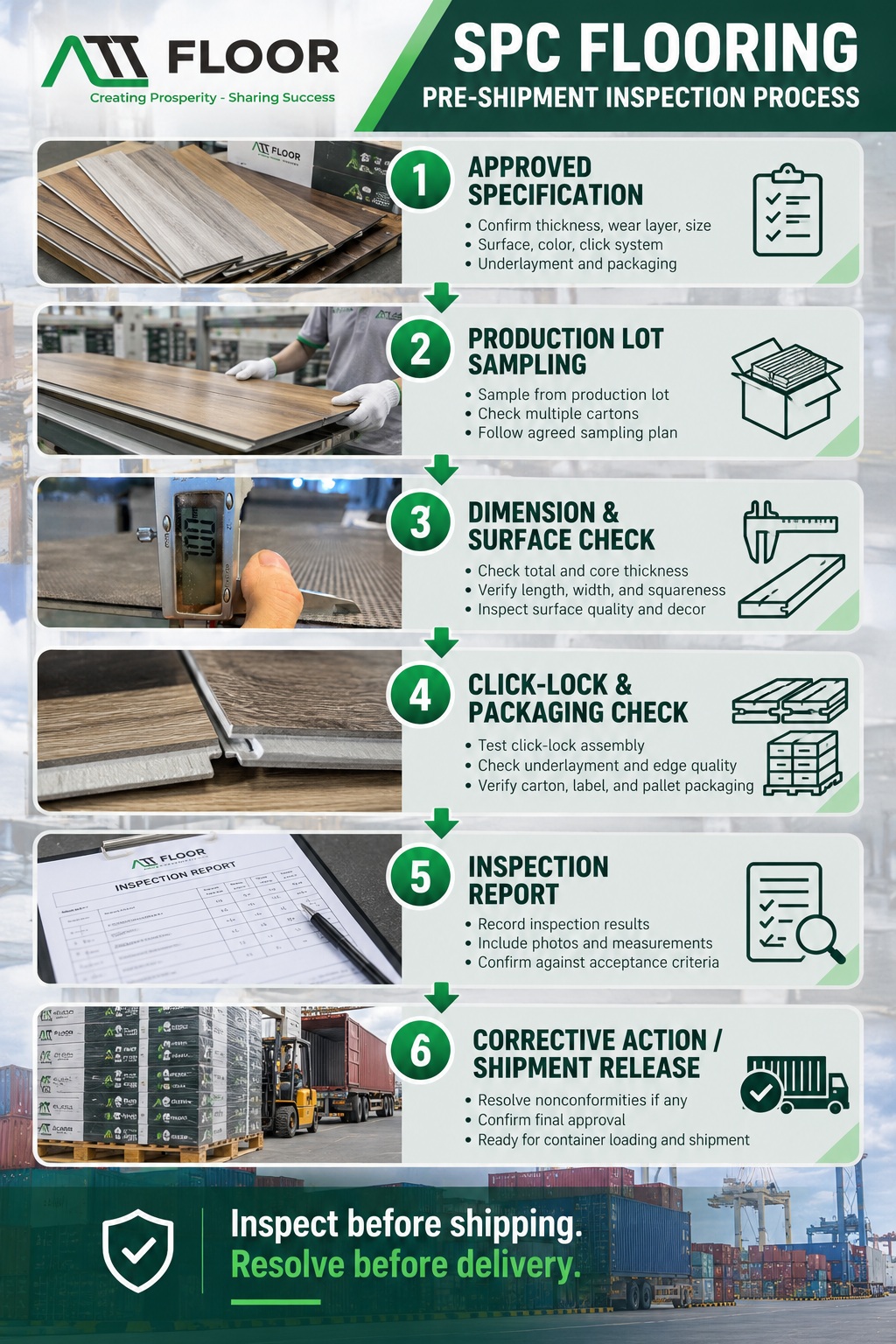
SPC flooring pre shipment quality control process
8. Factory QC vs Third-Party Inspection
Factory quality control and independent inspection serve related but different purposes.
Factory QC is integrated into the manufacturing process and can help identify issues during production.
Third-party inspection provides an additional assessment against an agreed scope and set of criteria.
For some buyers, particularly those placing their first substantial order, independent inspection may provide additional confidence.
However, neither factory QC nor third-party inspection should be interpreted as an unconditional guarantee of zero defects.
The value comes from clear standards, representative sampling, transparent reporting and corrective action.
9. A Practical SPC Flooring Quality Control Checklist
Before approving shipment, buyers can use the following checklist as a starting point.
|
Quality checkpoint |
Inspection objective |
|---|---|
|
Product specification |
Match approved purchase order |
|
Total and core thickness |
Verify dimensions and tolerances |
|
Plank length and width |
Confirm dimensional accuracy |
|
Surface appearance |
Identify visible defects |
|
Decor and color |
Compare with approved reference |
|
Abrasion/scratch testing |
Review relevant test results |
|
Click-lock profile |
Inspect profile and assembly |
|
Underlayment |
Verify material, thickness and bonding |
|
Carton quantity |
Match packing requirements |
|
Carton labels |
Confirm product and brand details |
|
Pallet condition |
Check stability and protection |
|
Loading documentation |
Confirm quantities and shipment records |
This checklist is not a substitute for product-specific technical standards or a formal inspection plan.
Its purpose is to help importers identify the key areas that should be addressed before goods are released.
10. Why Quality Control Protects More Than One Shipment
A container is a commercial transaction.
But the quality of that container can influence the next several transactions.
For distributors, product problems may result in customer complaints, returns, replacement expenses and reduced confidence from retailers.
Even when a manufacturer provides warranty support, overseas claims can be complicated by transportation costs, investigation time and inventory disruption.
Preventive quality control therefore has value beyond the immediate order.
It supports product consistency, customer satisfaction and repeat-order confidence.
This is especially important for private-label flooring brands because the finished product is sold under their own name.
The importer ultimately carries responsibility for the customer experience.
11. How ATT Floor Approaches Product Quality
At ATT Floor, we understand that international buyers need more than an attractive sample or a competitive quotation.
They need flooring that consistently matches the agreed product requirements.
Our SPC flooring manufacturing operations in Ninh Binh, Vietnam, include production and quality-control processes covering relevant product characteristics such as dimensions, surface condition and assembly.
ATT Floor also uses testing equipment for surface-performance evaluation, including abrasion and scratch testing.
For export orders, buyers can discuss specification confirmation, sample approval, inspection requirements and packaging details before production.
We believe a practical supplier relationship should make it easier to identify and resolve issues—not leave important questions unanswered until after shipment.
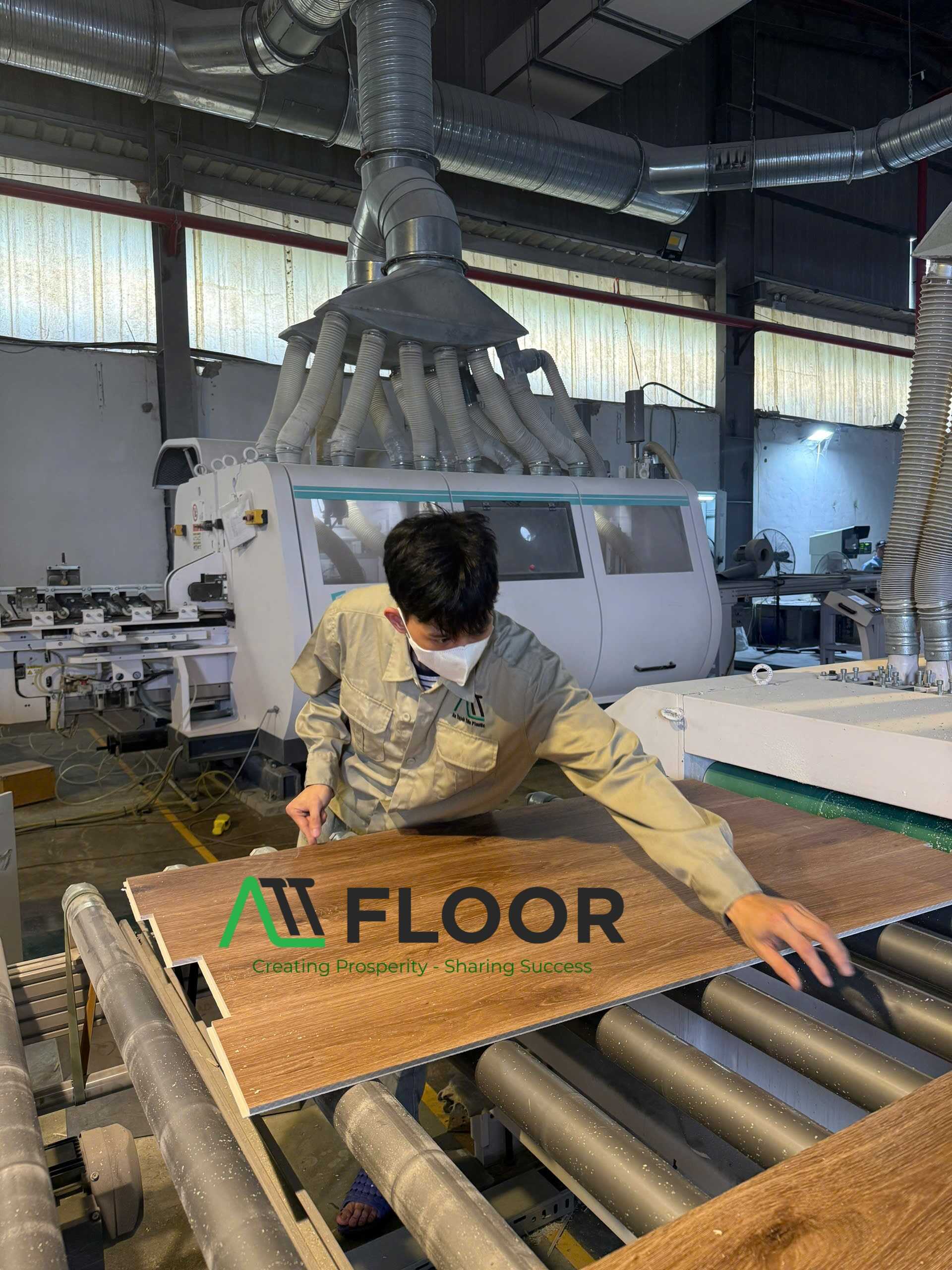
ATT Floor SPC flooring factory quality control Vietnam
12. Build Quality Control Into Your Sourcing Process
For importers sourcing SPC flooring from Vietnam, quality control should be part of the purchasing plan from the beginning.
A practical sequence is:
Confirm Specification → Approve Sample → Define Inspection Criteria → Monitor Production → Inspect Finished Goods → Resolve Issues → Release Shipment
This approach gives both the buyer and manufacturer clearer expectations.
It also reduces the likelihood of discovering preventable problems only after the container reaches its destination.
If you are still evaluating the sourcing process, read our guide on How to Import SPC Flooring from Vietnam.
For a closer look at manufacturing operations, explore SPC Flooring Factory in Vietnam: Inside the Manufacturing Process.
13. Frequently Asked Questions
13.1. What should importers check during SPC flooring inspection?
Importers should verify the approved product specification, dimensions, surface condition, color consistency, click-lock functionality, underlayment, packaging and relevant performance-test documentation.
13.2. Is checking SPC flooring thickness enough to confirm quality?
No. Thickness is one important characteristic, but it does not independently verify locking performance, surface durability, dimensional consistency or other product requirements.
13.3. Should I arrange a third-party inspection for my first container?
It can be a useful option, particularly when working with a new supplier or placing a substantial order. The decision should depend on the buyer's risk tolerance, inspection budget and existing quality-assurance arrangements.
13.4. Does a thicker wear layer always mean better flooring?
Not necessarily. Wear-layer thickness is one specification, but finished-product performance also depends on surface coating, construction, manufacturing consistency and relevant testing.
13.5. What happens if defects are found before shipment?
The buyer and supplier should review the findings against the agreed acceptance criteria and determine the appropriate corrective action before shipment approval.
14. Final Thoughts
Good SPC flooring quality control is not about expecting every production process to be perfect.
It is about creating a system that makes product requirements clear, identifies inconsistencies and allows corrective action before shipment.
For importers, the most valuable inspection is not necessarily the one with the longest checklist.
It is the one that focuses on the characteristics most likely to affect installation, appearance, product performance and customer satisfaction.
A competitive price may help secure the first order.
Consistent quality is what gives buyers a reason to place the next one.
-------------------------------------------------------------------------------------------------------------------
You can refer to SPC Flooring Container Loading Guide: How Specifications Affect Quantity, Weight and Landed Cost
Manufacturing Factory 1: Km7, Ha Nam Ward, Ninh Binh Province, Vietnam
Manufacturing Factory 2: Kim Binh Cluster, Ha Nam Ward, Ninh Binh Province, Vietnam
Manufacturing Factory 3: Lot CN-1.7, Le Ho Industrial Cluster, Le Ho Ward, Ninh Binh
Phone/WsA: +84 915961582
Email: tom@attfloors.com


